
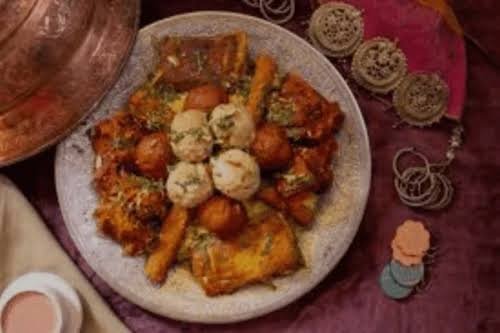
Wazwan is less a menu than an event. Traditionally served at weddings and major celebrations, it’s a multi-course Kashmiri feast — anywhere from seven to over thirty dishes — prepared by a waza, a chef trained in a craft passed down through generations, often over a full day of cooking in advance.
The format is as important as the food itself. Four guests sit around a single large shared platter called a trami, with a mound of rice at its centre and the meat dishes arranged around it. You eat with your right hand, taking rice and portions from the shared plate rather than individual servings — it’s communal by design, and part of the experience is simply matching the pace of the people you’re sharing the trami with.
A first-timer’s plate usually includes rista (spiced minced-meat balls in a deep red gravy), rogan josh (the dish most people outside Kashmir already know, though the local version leans more aromatic than fiery), and tabak maaz — ribs simmered until tender, then finished with a quick fry that leaves them crisp outside. The meal traditionally closes with gushtaba, meatballs in a mild, yogurt-based gravy, served as a deliberate palate-cleansing final course rather than an afterthought.
A note on pacing: Wazwan is meant to be worked through slowly across multiple courses, not rushed. It’s also traditionally a meat-forward menu, so if you’re vegetarian, it’s worth flagging in advance — most houseboat and homestay hosts in Srinagar are used to the request and will happily put together a vegetarian trami alongside the main spread.
The most memorable way to try it isn’t at a restaurant but as a hosted dinner — many houseboat stays on Dal Lake can arrange a proper Wazwan evening with advance notice, which is worth building into your itinerary if you want the real version rather than a shortened restaurant tasting menu.